
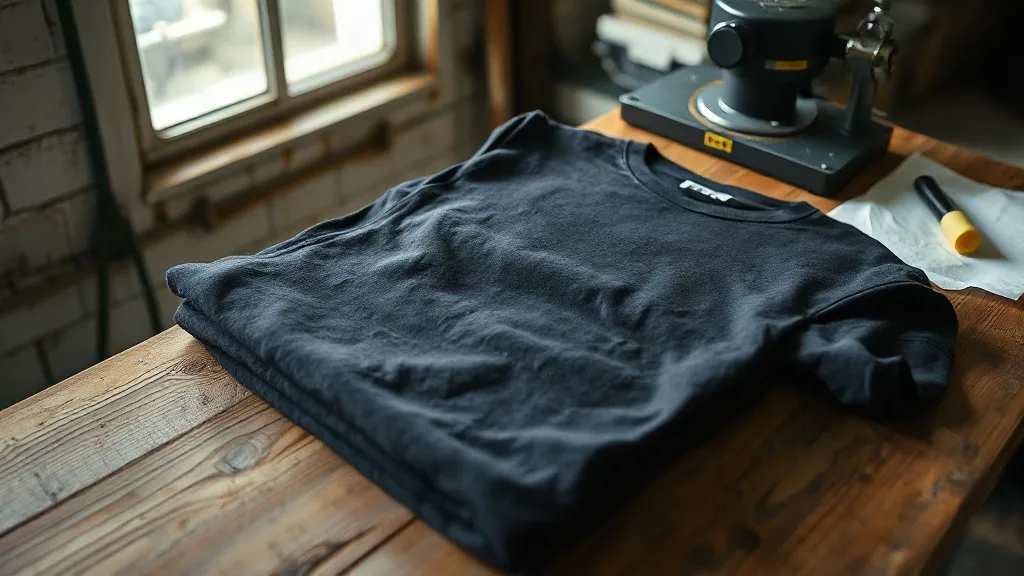
Most people who print on shaka wear blanks do it for one honest reason: the shirt feels like something. Heavy cotton, a boxy drop shoulder, a collar that does not collapse after three washes. Those qualities make it a favorite for streetwear drops, skate shop merch, and small brands that want a premium hand feel without the premium wholesale contract. They also make it a slightly different animal to decorate. This guide walks through what actually happens when DTF film meets Shaka fabric, and how to get a print that looks intentional instead of accidental.
Why Shaka Wear Blanks Behave Differently Under a Heat Press
Shaka Wear is built around heavyweight cotton and cotton-poly blends, usually in the 6 to 7 ounce range depending on the style. That weight is the whole point, but it changes the math at the press. Thicker fabric absorbs and redistributes heat more slowly, so the surface you are pressing is not always the surface the platen is touching. A 300 degree platen reading can translate into a noticeably cooler print zone on a 7 ounce tee compared to a 4.5 ounce fashion basic.
There is a second factor: garment dye and pigment dye finishes. Many Shaka styles come in washed, garment-dyed colorways, and those finishes can leave a faint residue or a slightly uneven surface texture. That is not a defect, it is the look. But it does mean your transfer needs a clean, dry, lint-free face to bond to. A quick pass with a lint roller and a 3 to 5 second pre-press does more for adhesion than any amount of extra pressure later.
Heavyweight Cotton vs. Cotton-Poly Blends
Pure cotton Shaka tees take DTF beautifully. The fiber surface is porous and slightly textured, which gives the adhesive powder plenty to grab onto, and the print sits in the fabric rather than floating on top of it. Blends behave a bit differently. The poly content can make the surface slightly smoother and more heat-reflective, so you may notice the film releasing a touch faster. In practice, this usually means dropping your press time by 2 to 3 seconds rather than changing temperature.
What Shaka's Boxy Fit Means for Artwork Placement
Drop shoulder construction shifts the shoulder seam outward, which pulls the visual center of the chest slightly wider than on a standard tee. A left-chest logo placed at the usual 3.5 inches from the center line can end up looking crowded toward the collar. Nudge it out to 4 to 4.5 inches and it reads correctly. For full front prints, Shaka's wider body means you can go bigger. A 12 inch wide print that feels oversized on a slim tee looks proportionate here, and 13 to 14 inches is well within reason for a statement graphic.
Choosing Colors That Survive Shaka's Washed Palettes
This is where a lot of first-time Shaka printers get surprised. Garment-dyed and pigment-dyed blanks are not perfectly flat in color. A vintage black tee may have subtle mottling, and a faded olive may shift a half shade across the body. White ink printed on top of that will pick up the variation underneath if your white layer is too thin.
The fix is straightforward: increase your white ink density on mid-tone and darker garments, and avoid relying on a single pass of white behind light-colored artwork. If you are printing on a washed colorway, test one shirt before committing a full run. Hold the pressed sample next to an unpressed blank under daylight, not shop lighting. Daylight exposes the difference between a print that sits on the surface and one that has properly bonded into the weave.
- Light garments: standard white base, full color on top, no special handling.
- Mid-tones (heather grey, sand, faded olive): double white base for any artwork with pale yellows, creams, or pastels.
- Dark and garment-dyed blacks: full double white base, and check for dye bleed after the first wash test.
- Neon and fluorescent inks: print on white blanks only. Neon over a white base on a dark Shaka tee will mute noticeably.
Press Settings That Actually Hold on Heavyweight Blanks
Manufacturer temperature charts are a starting point, not a rule. Here is a working baseline for Shaka-weight garments that you can adjust from.
- Pre-press the garment for 5 seconds at 320°F to remove moisture and wrinkles. Skip this and you will fight adhesion all day.
- Press the transfer at 300 to 310°F for 12 to 15 seconds with medium-heavy pressure. Heavyweight cotton needs the extra time more than extra heat.
- Peel cold or warm depending on your film. Cold peel gives sharper edges on fine detail; warm peel is more forgiving on large solid areas.
- Post-press with a Teflon sheet or parchment for 5 seconds to lock the edges down.
- Wash test one piece before you ship a run. One shirt, one cycle, and you will know more than any spec sheet can tell you.
If you notice corners lifting after the first wash, the cause is almost always insufficient pressure rather than insufficient heat. Raising temperature to compensate is a common mistake and it can scorch garment-dyed finishes, leaving a shiny patch that never goes away.
Building Gangsheets Around Shaka's Size Range
Shaka's size run tends to skew large, with many styles going up to 3XL and beyond. That matters for planning because a print sized for a medium looks undersized on a 3XL body. Rather than ordering separate transfers per size, you can scale artwork across a sheet and cut on the press. A DTF Gangsheet Builder makes this practical: you upload your art, arrange multiple sizes and colorways on one sheet, and the nesting is handled before it ever reaches the printer. For a small brand running five designs across four sizes, that is the difference between a manageable order and a pile of wasted film.
Two layout habits worth adopting. First, group by garment color, not by design. Transfers destined for dark shirts all need the same white base density, so batching them keeps your settings consistent across the sheet. Second, leave a half inch of clearance between jobs. Shaka's textured surfaces make trimming errors more visible, and a clean cut line is easier to hit when the artwork is not crowded.
A Note on Storage Before Pressing
DTF transfers absorb ambient moisture. If your shop runs humid, or if a sheet sits for weeks before use, you will see adhesion problems that have nothing to do with the press. Store sheets flat, in a sealed bag, away from direct sun. A silica packet in the bag costs almost nothing and solves a problem that otherwise takes an hour to diagnose.
When DTF Is the Right Call for Shaka Wear, and When It Is Not
DTF wins on full-color artwork, photographic gradients, small runs, and designs with fine detail. It also wins on speed, since there is no screen setup and no color separation. On Shaka's heavyweight cotton, the print sits with a soft hand that improves after the first wash.
Where it loses ground is on very large solid color blocks on stretchy blends, where a screen print or a properly cured plastisol will outlast it under repeated industrial washing. If you are printing for a team that washes uniforms daily, screen printing still has the edge. For retail drops, event merch, and brand launches, DTF on a Shaka blank is a strong, practical choice that ships fast and looks sharp.
Frequently Asked Questions
Can you DTF print on garment-dyed Shaka tees without dye bleeding?
Usually yes, provided you use a full white base and complete a wash test on one sample first. Garment-dyed finishes can release trace dye during the first wash, so a double white layer and a proper post-press are your safeguards. If a sample shows color migration into pale areas of the print after one cold wash, switch to a lower wash temperature recommendation on the care label.
What temperature should I use for a 7 ounce Shaka hoodie versus a tee?
Start at the same 300 to 310°F and extend the press time to 15 to 18 seconds for the heavier fleece. Hoodies also have seams running through the print zone, so use a pressing pillow to raise the seam area and keep pressure even. Pressing a seam flat without support is the most common cause of a partially bonded print on heavyweight fleece.
Does Shaka Wear shrink enough to affect print placement?
Heavyweight cotton can shrink modestly after the first hot wash, mostly in length rather than width. If placement precision matters, wash and dry one blank before printing your sample so your measurements reflect the finished garment. For production runs, recommending cold wash and low tumble dry keeps shrinkage predictable and protects the print at the same time.
How many Shaka shirts fit on a standard gangsheet?
It depends on artwork size and sheet dimensions. A typical layout mixing a left chest logo and a 12 inch front print can fit a dozen or more pieces per sheet. Nesting similar sizes together and grouping by garment color is the fastest way to reduce wasted film without shrinking your designs.
Is DTF durable enough for Shaka's heavyweight cotton after repeated washing?
With correct pressure, full cure, and a post-press, DTF on heavyweight cotton holds up well through dozens of home wash cycles. The failure points are almost always procedural: skipped pre-press, low pressure, or peeling the film too early. Fix those three and the print will outlast the trend that inspired it.